


Introduction
What if you could truly understand the desires and thoughts of your customers? Imagine how much deeper the interaction between your advertising and your audience would become.
Here's the reality: 85% of marketers say their content doesn't deliver business value. The root cause? A lack of understanding of their ideal client profile. Without knowing who you're really talking to, even the best campaigns fall flat.
This is where the buyer persona comes in. A buyer persona is a structured framework that represents your ideal customer. It goes beyond basic demographics to capture the behavioral patterns, motivations, and decision-making processes that drive purchasing decisions.
The main goal is simple but powerful: help marketers adapt their products and marketing campaigns to match the actual needs and behaviors of their target clients. When you know your customer at this level, everything changes — from the content you create to the channels you choose to the way you speak about your solution.
When done right, buyer personas deliver measurable results. Companies using well-researched personas see up to 210% increase in web traffic, 55% boost in organic traffic, and 10% higher email conversions. These aren't vanity metrics — they represent real business growth driven by genuine customer understanding.
Why Buyer Personas matter?
Buyer personas are a critical component of every successful marketing strategy. They help marketers identify and understand behavioral patterns within their audience — patterns that become invaluable when creating targeted ad campaigns and driving conversions.
Surveys consistently show positive impact after companies implement a structured buyer persona process. But the real question is: why do they work so well?
Behavioral Patterns Drive Better Decisions
When you understand how your ideal customers behave — not just who they are — you gain a competitive advantage. You stop guessing which messages will resonate and start making decisions based on evidence. You know which channels they trust, what content formats they prefer, and what objections they'll raise before they even say them.
This behavioral insight transforms every aspect of your marketing strategy, from the content you create to the way you structure your sales process.
What can Buyer Persona be used for:

Channel Selection: focus on platforms where your personas spend their time. If your research shows they prefer LinkedIn over TikTok, allocate budget there. This eliminates wasted spend on channels that don't reach your audience.
Campaign Messaging: craft messages that speak directly to your personas' goals and pain points. Use their language. When messaging reflects how customers think and speak, engagement rates increase and communications become more relevant.
Sales Enablement: give your sales team persona-specific talking points, objection responses, and case studies. When conversations are grounded in persona insights, conversion rates improve because your team addresses what each prospect values.
Customer Experience Design: tailor customer journeys to each persona's preferences, from onboarding to support. Some personas want hands-on guidance, others prefer self-service. Understanding these preferences creates experiences that feel personalized.
How to create a Buyer Persona?
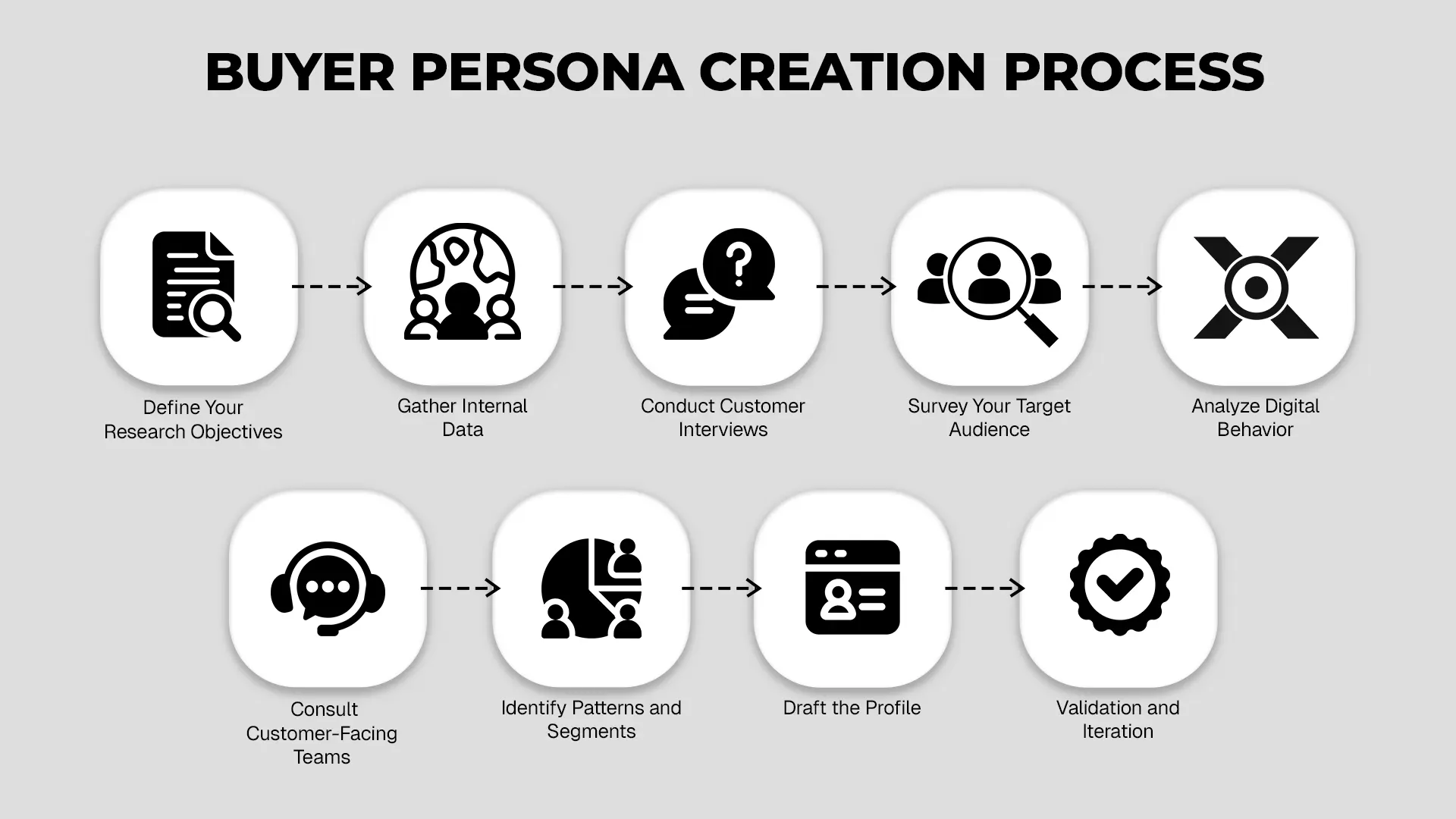
Creating effective buyer personas requires a systematic approach that combines data collection with strategic analysis. Follow this nine-step process to develop buyer personas that actually drive results.
Step 1: Define Your Research Objectives
Start by clarifying what you want to learn about your customers and how you'll use the personas. Ask yourself: What decisions will these personas inform? Which teams will use them? What gaps in customer understanding do we need to fill?
Document your objectives before you begin. This creates alignment across teams and prevents scope creep during the research phase.
Step 2: Gather Internal Data
Review your existing customer data before conducting new research. Your CRM, analytics platforms, and sales records contain valuable patterns waiting to be discovered.
Look for: Purchase history, Demographics, Engagement patterns, Sales cycle data, Customer support tickets.
Step 3: Conduct Customer Interviews
Speak directly with current customers to understand their motivations, challenges, and decision-making processes. Ask open-ended questions:
- What problem were you trying to solve when you started looking for our type of product?
- How did you discover us? What made you click or pay attention?
- How do you use the product in your daily life? What would you miss if it was gone?
- What convinced you to make the purchase? Was there a specific moment or feature?
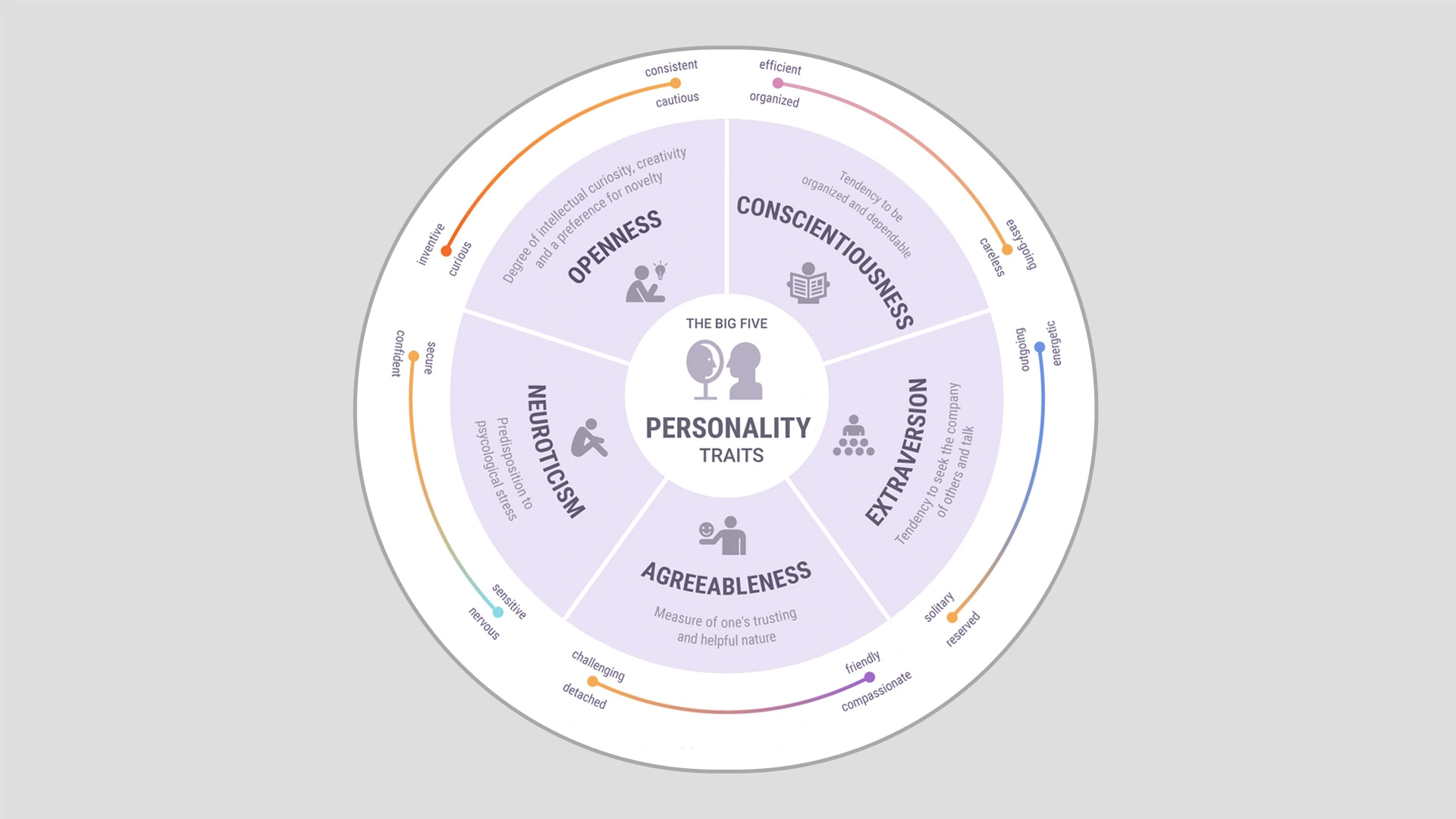
Pro Tip: Apply the Big Five Personality Traits Model
During interviews, listen for personality indicators that reveal how your buyer thinks and communicates. The Big Five model identifies five core dimensions.
Step 4: Survey Your Target Audience
Surveys complement interviews by collecting quantitative data from a broader sample. While interviews reveal the "why," surveys confirm patterns across your entire customer base.
Step 5: Analyze Digital Behavior
Behavioral data reveals what customers actually do, not just what they say they do. This is where tools like ObserviX become invaluable.
Use ObserviX to visualize the customer journey:
- Track which channels drive the highest-quality leads
- Identify content that influences conversions
- Map the touchpoints that matter most to different segments
- Analyze session patterns and engagement behaviors
- Monitor attribution data to see which marketing efforts drive results
Digital behavior analysis shows you where personas spend time, what content resonates, and which paths lead to conversion. This validates or challenges assumptions from interviews and surveys.
Step 6: Consult Customer-Facing Teams
Your sales, customer success, and support teams interact with customers daily.
These teams provide qualitative insights that complement your quantitative data. They can also validate whether your emerging personas match real customer segments they recognize.
Step 7: Identify Patterns and Segments
Review all your research data and look for natural groupings. Don't force artificial segments — let patterns emerge from the evidence.
Step 8: Draft the Profile
Now create detailed persona documents that your entire organization can use. Each persona should include:

Basic Information: name, photo, job title, age, location.
Background: career path and professional experience, education and skills, role responsibilities and success metrics.
Psychographic Profile: values, motivations, and attitudes, personality traits, work style and decision-making approach.
Goals and Challenges: primary goals, key challenges preventing goal achievement, how your solution helps them succeed.
Buying Behavior: how they research solutions, information sources they trust, decision-making criteria, typical objections and concerns, budget authority and approval process.
Communication Preferences: preferred channels, content formats they engage with
Quote or Motto: a direct quote that captures their mindset
Step 9: Validation and Iteration

Share your draft personas with stakeholders across marketing, sales, product, and customer success. Do these profiles resonate with their real-world experience?
Test your personas:
- Sales validation: Do these match the buyers they talk to daily?
- Marketing validation: Can these personas guide content and campaign decisions?
- Product validation: Do these reflect actual user behaviors and feature requests?
Refine based on feedback, then put your personas into action. The real validation comes from using them to guide decisions and measuring the results.
Buyer personas are living documents. Plan to review and update them annually, or whenever you notice significant market shifts, product changes, or new customer segments emerging.
Common Buyer Persona mistakes to avoid
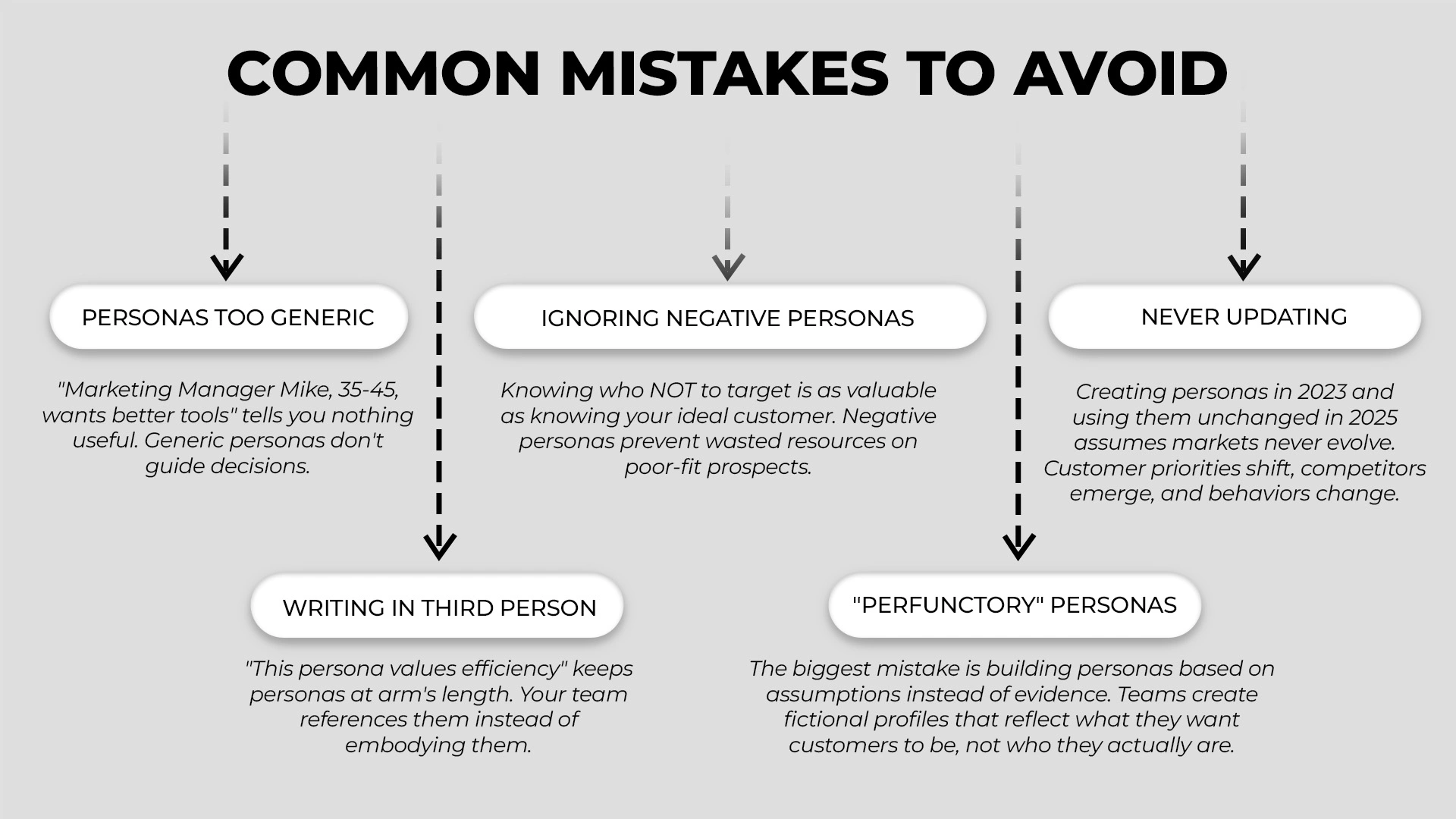
Even well-intentioned persona projects fail when teams make these common mistakes. Avoid them to ensure your personas actually drive results.
Creating "Perfunctory" Personas Without Research
The biggest mistake is building personas based on assumptions instead of evidence. Teams create fictional profiles that reflect what they want customers to be, not who they actually are.
Academic studies show that marketing messages reflecting the actual personality traits of their audience are significantly more effective. You can't reflect what you don't know.
The fix: Ground every persona in real customer interviews, surveys, and behavioral data. If you can't cite specific research supporting a persona trait, remove it.
Making Personas Too Generic
"Marketing Manager Mike, 35-45, wants better tools" tells you nothing useful. Generic personas don't guide decisions.
The fix: Include specific details — Mike's exact challenges, the language he uses, where he researches solutions, what objections he raises. Specificity makes personas actionable.
Writing in Third Person
"This persona values efficiency" keeps personas at arm's length. Your team references them instead of embodying them.
The fix: Write everything in first person: "I need solutions that save me time because I'm managing three campaigns simultaneously." This forces you to think like your customer.
Ignoring Negative Personas
Knowing who NOT to target is as valuable as knowing your ideal customer. Negative personas prevent wasted resources on poor-fit prospects.
The fix: Document characteristics of customers who churn quickly, require excessive support, or never see value. Exclude these segments from targeting.
Never Updating Personas
Creating personas in 2023 and using them unchanged in 2025 assumes markets never evolve. Customer priorities shift, competitors emerge, and behaviors change.
The fix: Review personas annually at minimum. Update when you notice performance drops or customer feedback that contradicts persona assumptions.
Conclusion
Creating buyer personas isn't just a marketing exercise — it's a fundamental shift in how you approach your business. When you move from guessing what your customers want to truly understanding their desires, challenges, and decision-making patterns, everything changes.
Remember the statistic we started with? 85% of marketers say their content doesn't deliver business value. The difference between the 85% who fail and the 15% who succeed comes down to one thing: genuine customer understanding. Well-crafted buyer personas give you that understanding.
But here's the critical part: buyer personas are living documents, not one-time projects. Markets evolve, customer needs shift, and new behaviors emerge. The companies that see the most success are those that continuously refine their personas based on real customer data and feedback.